
The Remarkable Return of Sri Lanka’s Lost Orchid

Vanda thwaitesii rediscovered after 160 years

Deep within the mist-covered forests of Sri Lanka’s Knuckles Mountain Range, an orchid long believed lost to history has quietly survived against all odds.
For more than 160 years, Vanda thwaitesii – a rare orchid found nowhere else on Earth – existed almost like a botanical ghost. Known only from old illustrations and historical records dating back to the 19th century, the species had never again been confirmed in the wild, leading generations of botanists to fear it had vanished forever.
Now, in one of the most extraordinary rediscoveries in Sri Lankan botany in recent decades, scientists have confirmed that the elusive orchid is still alive.
The rediscovery was recently published in the internationally renowned Kew Bulletin journal by researchers Bhathiya Gopallawa, Indrakheela Madola, Deepthi Yakandawala, Himesh Jayasinghe and Subhani Ranasinghe, bringing global attention to Sri Lanka’s unique and fragile biodiversity.
A Flower Lost in Time
The story of Vanda thwaitesii begins in the 1800s during the colonial era, when Sri Lanka’s forests were still being scientifically explored and documented.

The orchid was first recorded in 1861 from the Rangala and Hunnasgiriya areas in the Knuckles region. At the time, renowned botanical artist Haramanis de Alwis produced detailed illustrations of the species from collected material. Those drawings later became the basis for its formal scientific description by famed British botanist Sir Joseph Dalton Hooker in 1898.
Surprisingly, no preserved herbarium specimen of the plant existed – only the drawings survived.
As decades passed without any further sightings, the orchid slowly faded into obscurity. By the late 20th century, botanists considered Vanda thwaitesii “possibly extinct,” and it was eventually listed as Critically Endangered in Sri Lanka’s National Red List.
Yet some experts suspected the species might still survive hidden within the dense forests of the central highlands.
They were right.
The Discovery That Changed Everything
The rediscovery began unexpectedly in October 2020. A nature enthusiast from Rangala, Pradeep Kodithuwakku, shared photographs of an unusual orchid growing in his home garden with researchers involved in Sri Lanka’s National Botanical Survey.
The images immediately caught attention.
The plant resembled the long-lost Vanda thwaitesii – a species many believed no one would ever see again.
Intrigued by the possibility, researchers travelled to the Knuckles region to investigate further. Detailed field studies and comparisons with the original 19th century illustrations confirmed the remarkable truth: the orchid had survived unnoticed for more than 160 years.
For Sri Lankan botanists, it was a once-in-a-lifetime moment.
Surviving in the Shadows of the Knuckles
The rediscovered populations were found growing as epiphytes – plants that grow on trees without harming them – in riverine forests along the Hulu Ganga.

The orchids were attached to native trees such as Mangifera zeylanica (“Atamba”) and Mesua ferrea (“Na”), surrounded by the cool, humid environment of the Knuckles highlands.
What shocked researchers most was how incredibly rare the species remains.
Fewer than ten mature plants are currently known from the wild, all confined to a tiny stretch of habitat of roughly 50 metres.

Despite surviving for over a century and a half unnoticed, the species remains dangerously close to extinction.
What Makes Vanda thwaitesii Special?
At first glance, Vanda thwaitesii may not resemble the large colourful hybrid orchids commonly seen in gardens and flower shops.
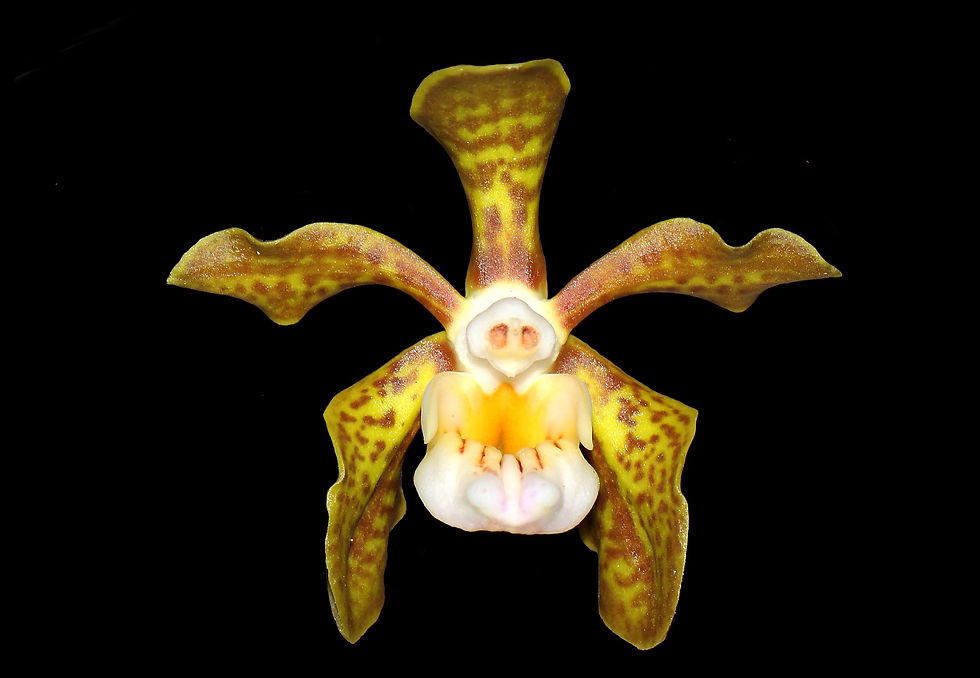
Its beauty is subtler and deeply tied to the wild forests it inhabits.
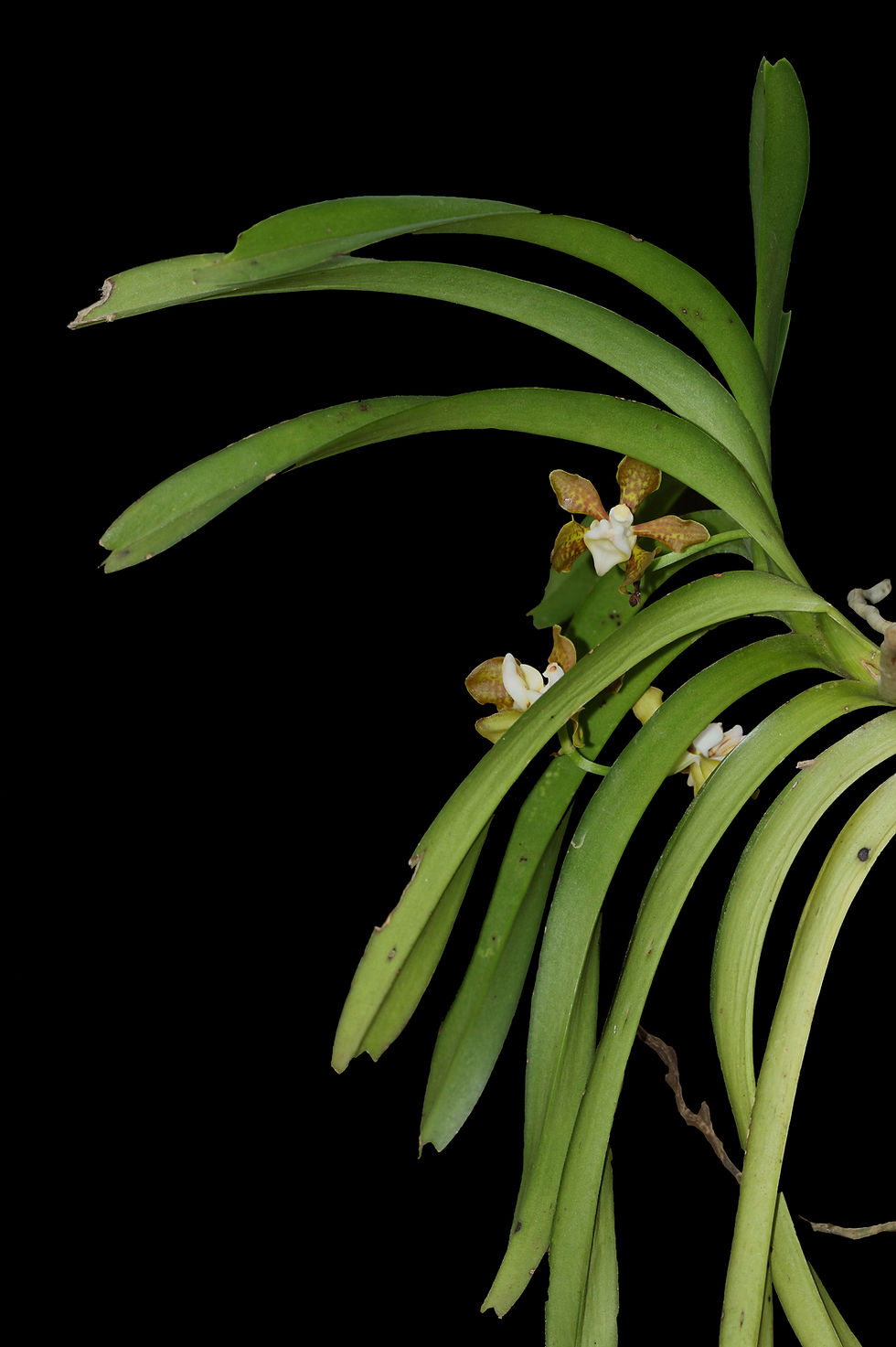
The orchid produces fragrant yellowish-brown flowers decorated with intricate brown tessellations and markings. Each flowering stem usually carries only two or three blooms, making every flowering event particularly precious.
The plant itself is compact, with thick curved leaves adapted to life in exposed forest canopies.
Researchers also discovered several unique features that distinguish the species from closely related orchids found in India. In fact, for years some scientists mistakenly believed the Sri Lankan orchid also occurred in southern India. More recent studies have now confirmed that the Indian plants belong to a completely different species known as Vanda sathishii.
This means Vanda thwaitesii is truly endemic to Sri Lanka.
Racing Against Extinction
While the rediscovery has excited botanists and conservationists alike, it also highlights how vulnerable Sri Lanka’s endemic species have become.

The newly discovered populations exist outside protected areas and face multiple threats including habitat degradation, forest fragmentation and human disturbance.
Because so few plants remain, even a single destructive event could have catastrophic consequences for the species.
Researchers have therefore officially assessed Vanda thwaitesii as Critically Endangered according to IUCN Red List criteria.
To help secure its future, scientists have already begun conservation efforts. Plants collected during the survey were cultivated at the Royal Botanic Gardens, Peradeniya, where researchers successfully flowered and propagated the orchid under controlled conditions.
Seed propagation work has also been initiated to support future conservation programmes.
A Reminder of Sri Lanka’s Hidden Biodiversity
The rediscovery of Vanda thwaitesii is more than just the return of a rare flower.
It is a powerful reminder that Sri Lanka’s forests still hold hidden species waiting to be discovered – and rediscovered.
The Knuckles Mountain Range, already recognised as a UNESCO World Heritage conservation forest, continues to reveal extraordinary biological treasures despite centuries of exploration.

Perhaps most importantly, this discovery also highlights the role local communities and citizen naturalists can play in conservation. Without the keen observations shared from Rangala, the orchid may have remained hidden indefinitely.
For now, Vanda thwaitesii stands as a symbol of resilience – a species that quietly endured through colonial history, deforestation and decades of uncertainty, surviving in silence until the forests finally revealed its secret once again.
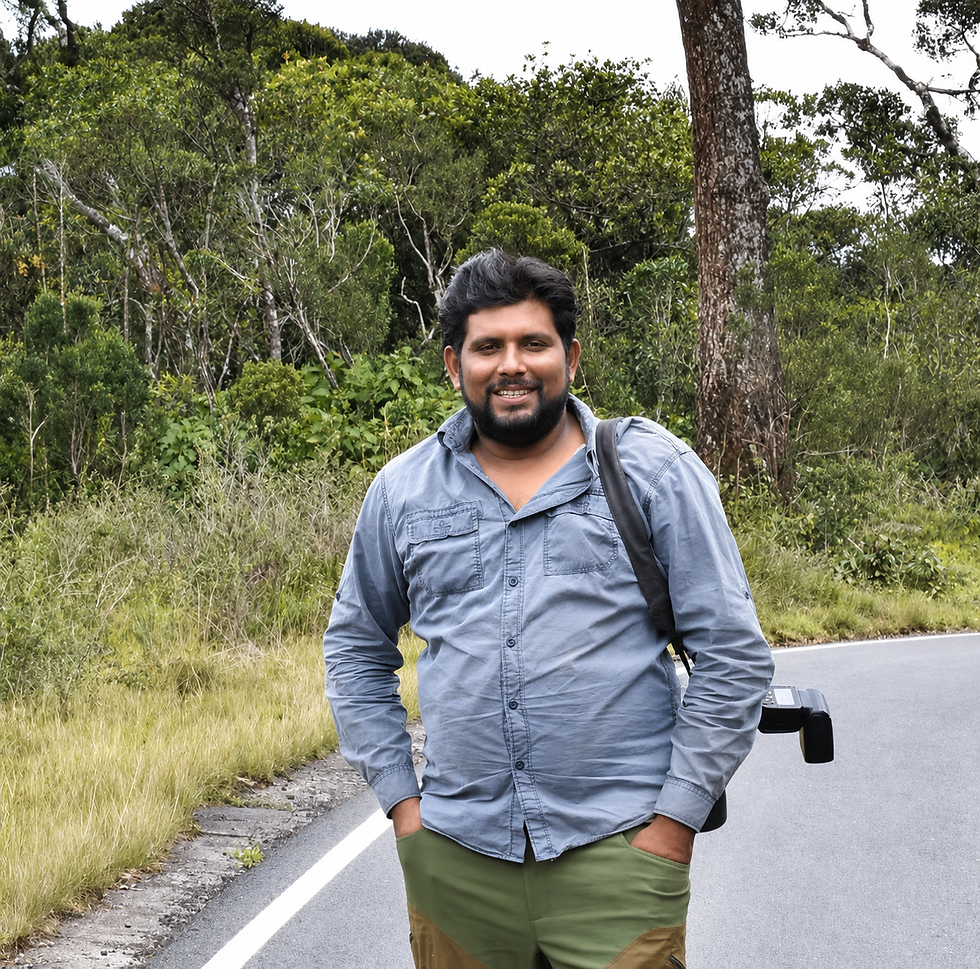
From uncovering a species lost for over 160 years to safeguarding its future, Bhathiya Gopallawa shares the story behind the remarkable rediscovery of Vanda thwaitesii and what it means for Sri Lanka’s biodiversity.
Q: For readers hearing about Vanda thwaitesii for the first time, what makes this orchid so special in Sri Lanka’s botanical history?
A: For me, Vanda thwaitesii represents one of the most remarkable botanical mysteries in Sri Lanka. The species was known only from historical illustrations prepared in the 19th century and had not been confirmed in the wild for more than 160 years. Its rediscovery is therefore not just the finding of a rare orchid, but the return of a species many botanists feared had been lost forever. As an endemic species found nowhere else in the world, it is an important part of Sri Lanka’s natural heritage and botanical history.
Q: What does this rediscovery tell us about the biodiversity value of the Knuckles Mountain Range?
A: The rediscovery highlights the extraordinary biodiversity value of the Knuckles Mountain Range. Even after centuries of botanical exploration, the region continues to reveal new and unexpected discoveries. It demonstrates that these forests still harbor rare, endemic, and poorly known species that require further scientific study and conservation. Knuckles remains one of Sri Lanka’s most important biodiversity hotspots and a refuge for species that may have disappeared from other areas.
Q: How concerning is the species’ present conservation status?
A: The conservation status of Vanda thwaitesii is extremely concerning. During our surveys, we found fewer than ten mature individuals confined to a very small area. Such a restricted population is highly vulnerable to habitat disturbance, climate-related events, and other environmental pressures. Based on the available evidence, we assessed the species as Critically Endangered according to IUCN criteria, meaning it faces an extremely high risk of extinction in the wild if immediate conservation measures are not taken.
Q: Have there been any conservation or propagation efforts started since the rediscovery?
A: Yes. Since the rediscovery, we have initiated several conservation actions. Living specimens were introduced to the Royal Botanic Gardens, Peradeniya, where they have been successfully cultivated and flowered under controlled conditions. We have also begun propagation efforts, including seed-based conservation work, to establish ex-situ populations. These initiatives are important steps toward safeguarding the species and supporting future recovery programmes.
Q: Why is it important to conserve orchids like Vanda thwaitesii, even if many people may never see them in the wild?
A: Every species plays a unique role in maintaining ecosystem balance, regardless of how visible it is to people. Orchids are often highly specialized plants that reflect the health of their habitats. Conserving species such as Vanda thwaitesii helps protect the ecological integrity of the forests where they occur. In addition, endemic species represent millions of years of evolutionary history that cannot be replaced once lost. Protecting them is both a scientific responsibility and a commitment to preserving Sri Lanka’s natural heritage for future generations.

Q: The rediscovery attracted international attention. How significant is this finding for Sri Lanka’s reputation as a biodiversity hotspot?
A: The rediscovery reinforces Sri Lanka’s global significance as a biodiversity hotspot. It demonstrates that our forests continue to hold unique species and scientific discoveries of international importance. The publication of this finding in an internationally recognized journal has helped draw global attention to Sri Lanka’s rich biological heritage and highlights the need for continued investment in biodiversity research and conservation.
Q: Do you think there could still be other “lost” or supposedly extinct plant species waiting to be rediscovered in Sri Lanka?
A: Absolutely. Sri Lanka has many remote forests and understudied habitats, and there are several plant species that have not been recorded for decades. The rediscovery of Vanda thwaitesii reminds us that the absence of recent records does not necessarily mean extinction. With continued field exploration, careful taxonomic research, and collaboration with local communities, I believe there is a real possibility that other lost or poorly known species are still waiting to be rediscovered.
Research source:
Gopallawa, B., Madola, I., Yakandawala, D., Jayasinghe, H., & Ranasinghe, S. (2025). Rediscovery of the endemic Vanda thwaitesii (Orchidaceae) after 160 years in the central highlands of Sri Lanka and its lectotypification. Kew Bulletin, 80, 765–773.
Images courtesy of Bhathiya Gopallawa – Research Assistant at the Postgraduate Institute of Science (PGIS), University of Peradeniya.


Comments