
Bundala National Park

Sri Lanka’s Quiet Wildlife Escape by the Sea
On Sri Lanka’s sun-scorched southern coast, where the land meets the sea in a quiet, shimmering expanse, lies one of the island’s most understated natural treasures – Bundala National Park. Unlike the dramatic, big-cat allure of nearby Yala National Park, Bundala does not announce itself loudly. Instead, it reveals its beauty slowly – through still lagoons, distant bird calls, and the subtle rhythm of an ecosystem shaped by water, salt, and time.

A Wetland of Global Significance

Bundala is no ordinary national park. It holds the distinction of being Sri Lanka’s first designated Ramsar wetland, placing it among a global network of ecosystems recognised for their ecological importance. It is also a UNESCO Biosphere Reserve – a title that reflects not only its biodiversity, but also its role as a living laboratory where conservation and human activity intersect.
What makes Bundala truly distinctive is its identity as a coastal wetland ecosystem. Unlike dense forests or open savannahs, the park unfolds as a network of shallow lagoons, salt flats, marshes, and sandy dunes.

At first glance, Bundala may appear sparse – a dry zone terrain marked by scrub forests and open plains. But look closer, and its complexity begins to unfold. The park is built around a system of shallow lagoons – Bundala, Embilikala, Malala, Koholankala, and Maha Lewaya – each with its own salinity levels, seasonal fluctuations, and ecological character.

These lagoons are the lifeblood of the park. Fed by monsoonal rains and influenced by the nearby ocean, they create a dynamic environment where freshwater and saltwater mingle. During wetter months, the lagoons fill and expand, attracting an abundance of aquatic life; in drier periods, they shrink, exposing mudflats that become feeding grounds for birds.

Surrounding these wetlands are sand dunes, salt pans, thorny scrublands, and patches of mangrove. Together, they form a mosaic of habitats – each supporting a different community of species, yet all intricately connected.
A Haven for Birdlife
Bundala’s true identity lies in its skies and waters. It is widely regarded as one of Sri Lanka’s most important birding destinations, attracting both resident and migratory species in remarkable numbers.
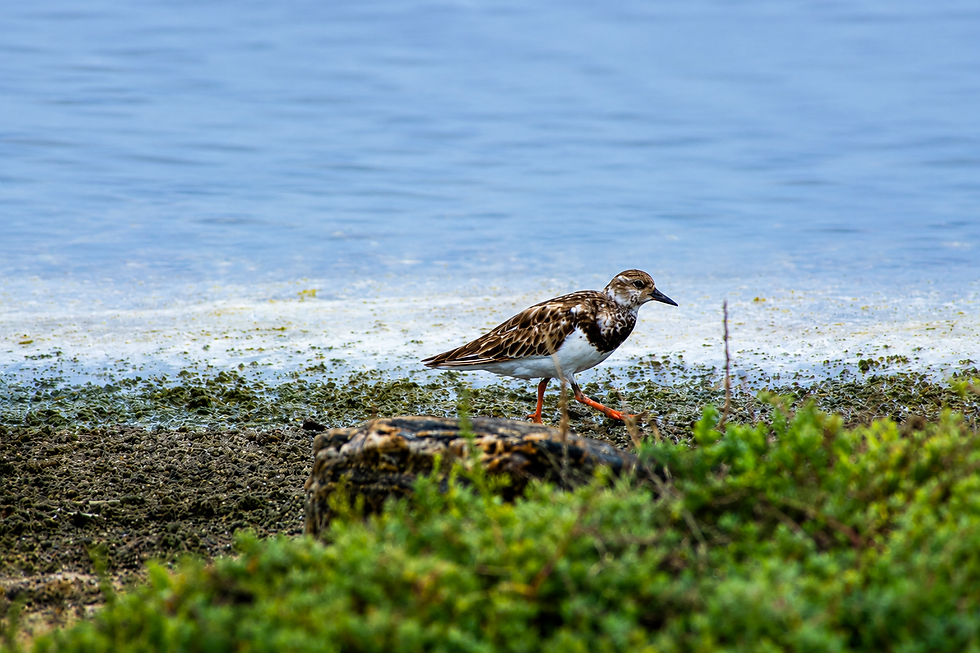
What truly defines Bundala National Park is not just the number of birds it hosts, but the way birdlife shapes the entire experience of the landscape. Here, the lagoons are never still for long. They ripple with movement – wings skimming the surface, flocks rising in synchrony, and calls echoing across open water. For a visitor, it quickly becomes clear that Bundala is not simply a place to see birds, but a place to experience them as part of a functioning, breathing ecosystem.

Every year, birds travel thousands of kilometres along the Central Asian Flyway to reach these lagoons. For them, Bundala is not just a stopover – it is a sanctuary. Bundala supports close to 200 species of birds, with a remarkable mix of both resident and migratory populations. Around 58 of these are seasonal visitors, arriving from distant regions such as Siberia and Central Asia, drawn by the park’s shallow lagoons and nutrient-rich mudflats.
What makes this even more extraordinary is that Bundala serves as a final destination along a long migratory journey – a place where birds rest, feed, and recover after crossing continents.

Bundala’s lagoons host an astonishing variety of waterbirds, each adding to the park’s vibrant character. Pelicans are among the most striking, with the spot-billed pelican, a near-threatened species, often seen gliding gracefully across the water or working in synchronised groups to catch fish. Painted storks and Asian openbills wade slowly through the shallows, their reflections mirrored perfectly in the calm lagoons. Ibis, spoonbills, and herons contribute to the visual richness, each employing unique feeding techniques – from probing mud with sensitive bills to sweeping water in deliberate arcs.

The quieter corners of the lagoons host flocks of whistling ducks and teal, while rare species like the black-necked stork, pied avocet, and great thick-knee move with an elegant, deliberate presence across the flats. Migratory waders, including broad-billed sandpipers, red-necked phalaropes, plovers, stints, and redshanks, animate the mudflats with frenetic, synchronised feeding patterns that resemble living choreography. Kingfishers, both common and the rare black-capped variety, flash along the water’s edge, while ospreys patrol overhead, and nightjars emerge at sundown, filling the air with subtle calls.

Beyond the wetlands, Bundala’s scrublands and scattered trees support another layer of avian diversity. Hawk eagles and crested hawk eagles circle the skies, blue-tailed bee-eaters perch in alert clusters, and brown-capped babblers, crimson-fronted barbets, blue-faced malkohas, Sri Lanka woodshrikes, Sri Lanka junglefowl, and Ceylon green pigeons add splashes of colour and movement throughout the landscape. Even crested treeswifts can be seen skimming the open skies, completing a living tapestry of endemic, migratory, and rare species that makes Bundala an unparalleled destination for bird enthusiasts.

Green bee-eater 
Great thick-knee 
Jacobin cuckoo 
Greater painted-snipe 
Streaked weaver 
Black-headed munia 
Ashy-crowned sparrow-lark 
Jerdon's bush lark 
Common hoopoe 
Lesser adjutant 
Glossy ibis 
Common kingfisher
For decades, however, Bundala was most famous for one particular visitor – the Greater flamingo. These elegant birds, migrating from the Rann of Kutch, would arrive in large flocks, transforming the lagoons into a breathtaking sea of pink. It was a spectacle that defined the park, drawing birdwatchers and photographers from around the world.

The construction of the Kirindi Oya Irrigation Project altered the natural flow of water into the park’s lagoons, changing salinity levels and disrupting the delicate balance of algae and microorganisms that once sustained the flamingos. With their primary food sources diminished, the lagoons no longer offer the conditions these birds need, and the iconic pink flocks that once graced Bundala’s waters have disappeared, leaving a striking reminder of how human interventions can reshape ecosystems.
More Than a Bird Sanctuary

Beyond its celebrated birdlife, Bundala also supports a fascinating range of mammals that add another dimension to the safari experience. The park is one of the few places in Sri Lanka where visitors may encounter the Asian elephant moving quietly through scrublands or emerging near water sources in the early morning light. These sightings often feel especially intimate due to the park’s quieter atmosphere and lower vehicle traffic. Herds sometimes pass through the landscape seasonally, using Bundala as part of a broader movement corridor between surrounding habitats.

Among the most commonly seen mammals are spotted deer, which graze across open plains and forest edges, often in alert groups. Their presence frequently attracts predators and scavengers, making them an important part of the ecosystem. Wild boar can also be spotted rooting through vegetation or crossing tracks in family groups, while the agile toque macaque and grey langur are occasionally seen in wooded patches, feeding or resting in the shade.

Bundala is also home to more elusive carnivores. Golden jackals are among the park’s most charismatic mammals, often seen trotting confidently through open terrain or pausing to scan the surroundings. They are especially active during the cooler hours of dawn and dusk. Smaller predators such as the ruddy mongoose and Indian grey mongoose move discreetly through scrub and grasslands, playing an important role in controlling rodent and reptile populations.
Though less frequently encountered, Bundala’s wild spaces may also shelter nocturnal species such as the fishing cat, jungle cat, and Indian hare, which tend to remain hidden during daylight hours. At night, the landscape becomes a different world entirely, with mammals emerging under cover of darkness to forage and hunt.

What makes mammal sightings in Bundala special is the sense of natural calm in which they occur. There are no crowds rushing from one sighting to the next. Instead, animals are often observed behaving naturally – deer grazing undisturbed, jackals moving silently across the plains, or elephants feeding among thorny scrub. This creates a safari experience that feels less hurried and more authentic, allowing visitors to appreciate Bundala not only as a bird sanctuary, but as a complete and thriving wildlife ecosystem.
A Wetland Built for Birds

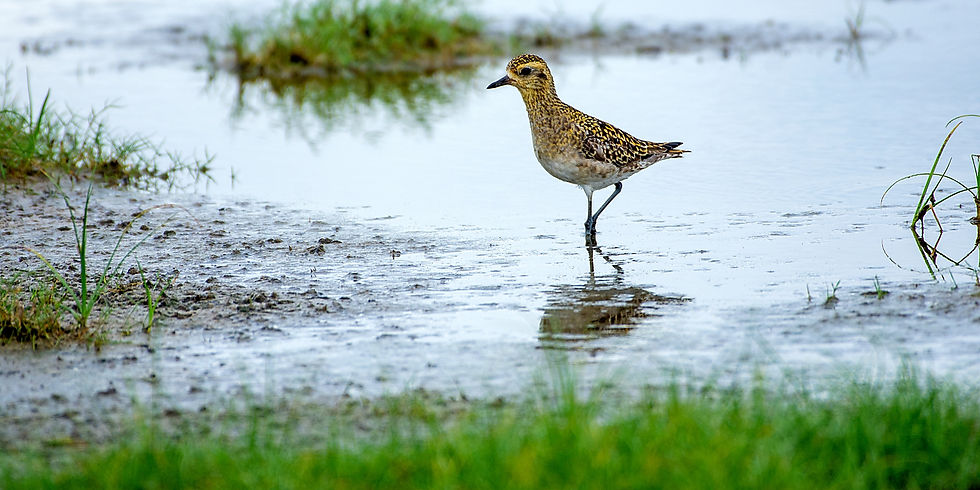
The reason for this abundance lies in Bundala’s ecology. The park’s lagoons, salt pans, and intertidal flats create ideal feeding grounds, especially for waterbirds and waders. These shallow waters are rich in plankton, algae, crustaceans, and small fish – exactly the kind of food sources that migratory birds depend on.

As water levels change with the seasons, so too does bird behaviour. During wetter periods, birds disperse across wide lagoons. In the dry months, when water recedes, large congregations gather in exposed feeding areas, creating dense, active scenes of foraging and interaction.
This dynamic environment means that no two visits to Bundala are ever quite the same – birdlife is constantly responding to subtle environmental shifts.
What Sets Bundala Apart
Bundala’s appeal lies not just in what it has, but in how it feels. There is a stillness here that is increasingly rare in wildlife destinations.

Without the pressure of tracking apex predators, visitors are free to engage with the environment more deeply. The focus shifts from ticking off sightings to understanding ecosystems – watching how birds feed with the changing water levels, or how light transforms the lagoons throughout the day.

The open landscapes also offer exceptional opportunities for photography. Reflections on still water, vast skies, and the interplay of textures – mud, salt, vegetation – create compositions that are both minimalist and powerful.

A More Sustainable Safari Experience
For travellers interested in responsible tourism, Bundala presents a quieter, more sustainable alternative to high-traffic parks.
The relatively low visitor numbers help reduce stress on wildlife, while also allowing for a more intimate experience. Safaris here tend to be slower and more deliberate, guided by observation rather than urgency.

This makes Bundala particularly appealing to birdwatchers, photographers, and those looking to connect with nature in a more mindful way.
It also highlights an important shift in travel – from seeking spectacle to seeking meaning. In Bundala, the reward is not just what you see, but how you experience it.
Planning Your Visit
Bundala is located in Sri Lanka’s southern dry zone, making it easily accessible from Hambantota and within reach of the island’s southern coastal circuit.

The best time to visit for birdlife is typically between November and March, when migratory species arrive in large numbers. Early mornings and late afternoons offer the most active wildlife sightings, as well as the most dramatic light for photography.

A guided safari is highly recommended, as experienced safari drivers can help interpret the landscape and point out species that might otherwise go unnoticed.
In a country celebrated for its wildlife, Bundala National Park stands apart – not for its scale or intensity, but for its nuance.
For those willing to slow down and look closer, Bundala offers something rare: a chance to witness the quiet complexity of the natural world, and to understand why places like this matter – not just as destinations, but as living systems worth protecting.


Comments